
ECG / Long-Term ECG
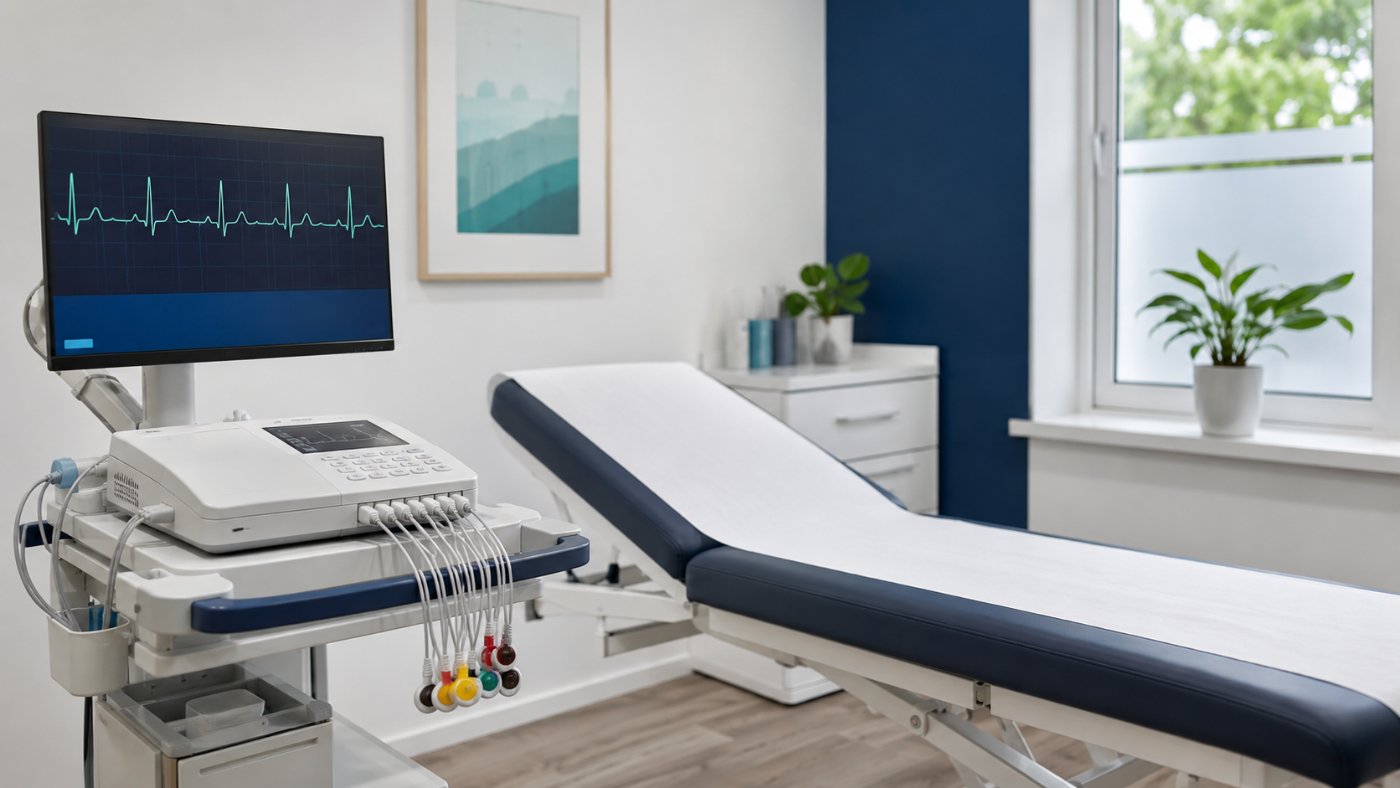
Comprehensive Heart Rhythm Analysis
Our ECG and Long-Term ECG services offer a detailed window into your heart's electrical health. While a standard electrocardiogram provides a vital snapshot of your heart at rest, many irregularities only appear during the stresses and movements of your daily life. By utilizing advanced long-term monitoring—such as Holter monitors—we can record your heart's rhythm over 24 hours or more.
The Standard ECG: The Vital Baseline
A standard ECG is a quick, non-invasive test that records the electrical signals in your heart. It is the gold standard for a first-line assessment because it can instantly show:
• Heart Rate and Rhythm: Whether your heart is beating too fast, too slow, or irregularly.
• Heart Attack Evidence: Signs of previous heart damage or an ongoing event.
• Structural Abnormalities: Clues regarding thickened heart walls or chamber enlargement.
Why long-term?
Some heart symptoms are like "ghosts"—they come and go unexpectedly. If you experience palpitations, dizziness, or chest pain that doesn't happen while you are sitting in the doctor's office, a Long-Term ECG is necessary.
• 24 to 72 Hour Tracking: The device stays with you as you work, exercise, and sleep.
• Symptom Correlation: You can press a button or keep a diary when you feel a symptom, allowing the doctor to see exactly what your heart was doing at that precise moment.
• Catching "Silent" Issues: It can detect arrhythmias like Atrial Fibrillation (AFib) that might occur briefly without you even feeling them.
How it Works: Seamless & Painless
• Placement: Small, sticky sensors (electrodes) are placed on your chest and connected to a lightweight, portable recorder.
• No Interruption: The device is small enough to be worn under your clothes, allowing you to go about your day as usual.
• Detailed Reporting: Once the monitor is returned, our specialists analyze thousands of heartbeats to provide a comprehensive report on your cardiac performance.
Stress ECG (Ergometry)
Your heart health under examination. A stress ECG shows us how your heart and circulation respond to physical exertion. Often, abnormalities (such as circulation disorders or arrhythmias) only become apparent when the body is challenged.
Why a stress ECG?
• Early Detection: Suspected narrowing of the coronary arteries (CHD/CAD).
• Blood Pressure Check: Assessment of blood pressure behavior under physical exertion.
• Performance Diagnostics: Assessment of physical fitness (e.g., following an illness or for sports beginners).
• Therapeutic Success: Monitoring the effectiveness of heart or blood pressure medications.
Sequence of Events
You are pedaling on a stationary bike (ergometer). The resistance is increased step by step, while we continuously record your ECG and regularly measure your blood pressure.
Important for you: Please bring comfortable clothing (sportswear or loose-fitting trousers) as well as sturdy shoes. Plan approximately 20 to 30 minutes for the examination, including preparation and follow-up.